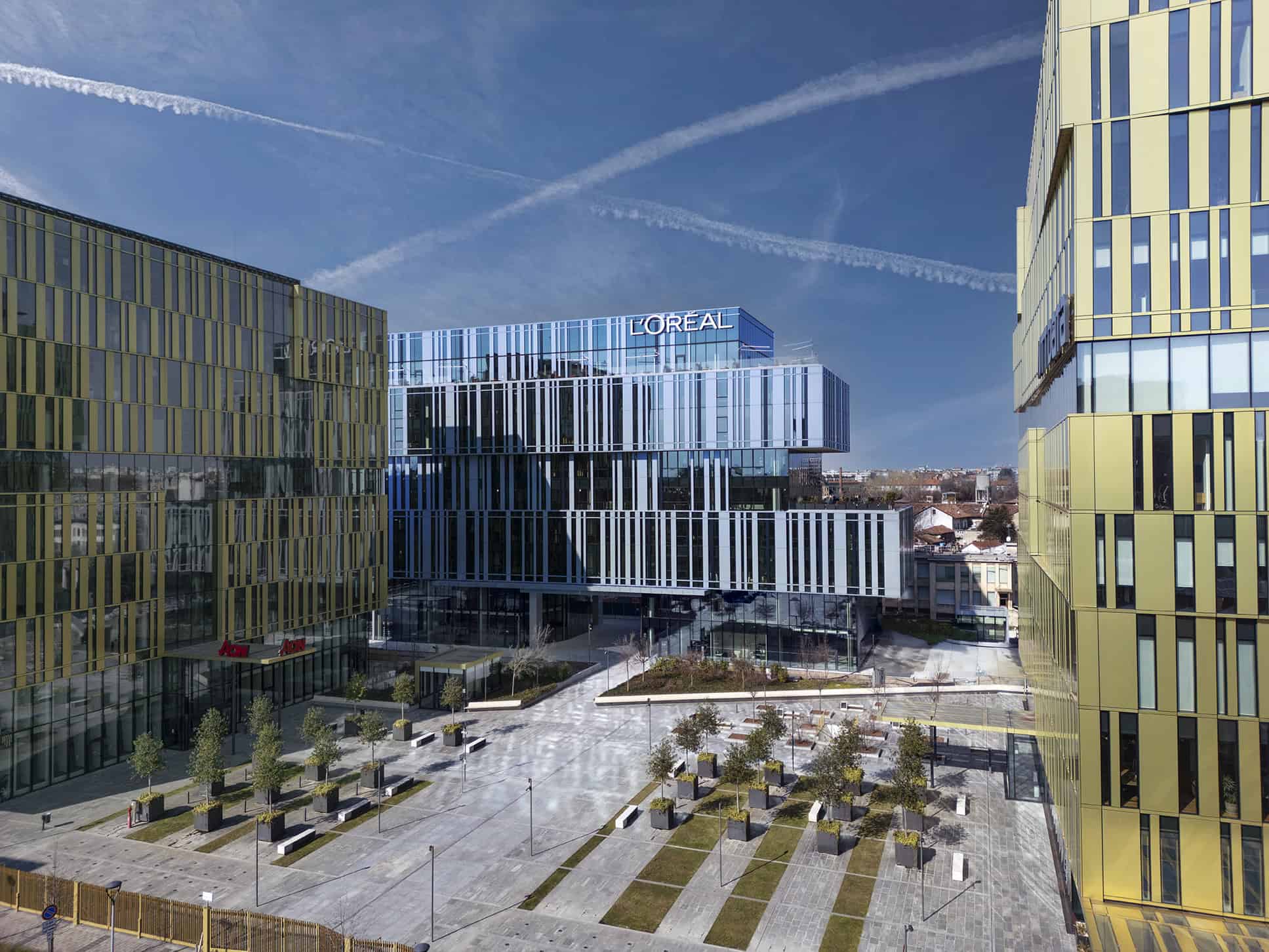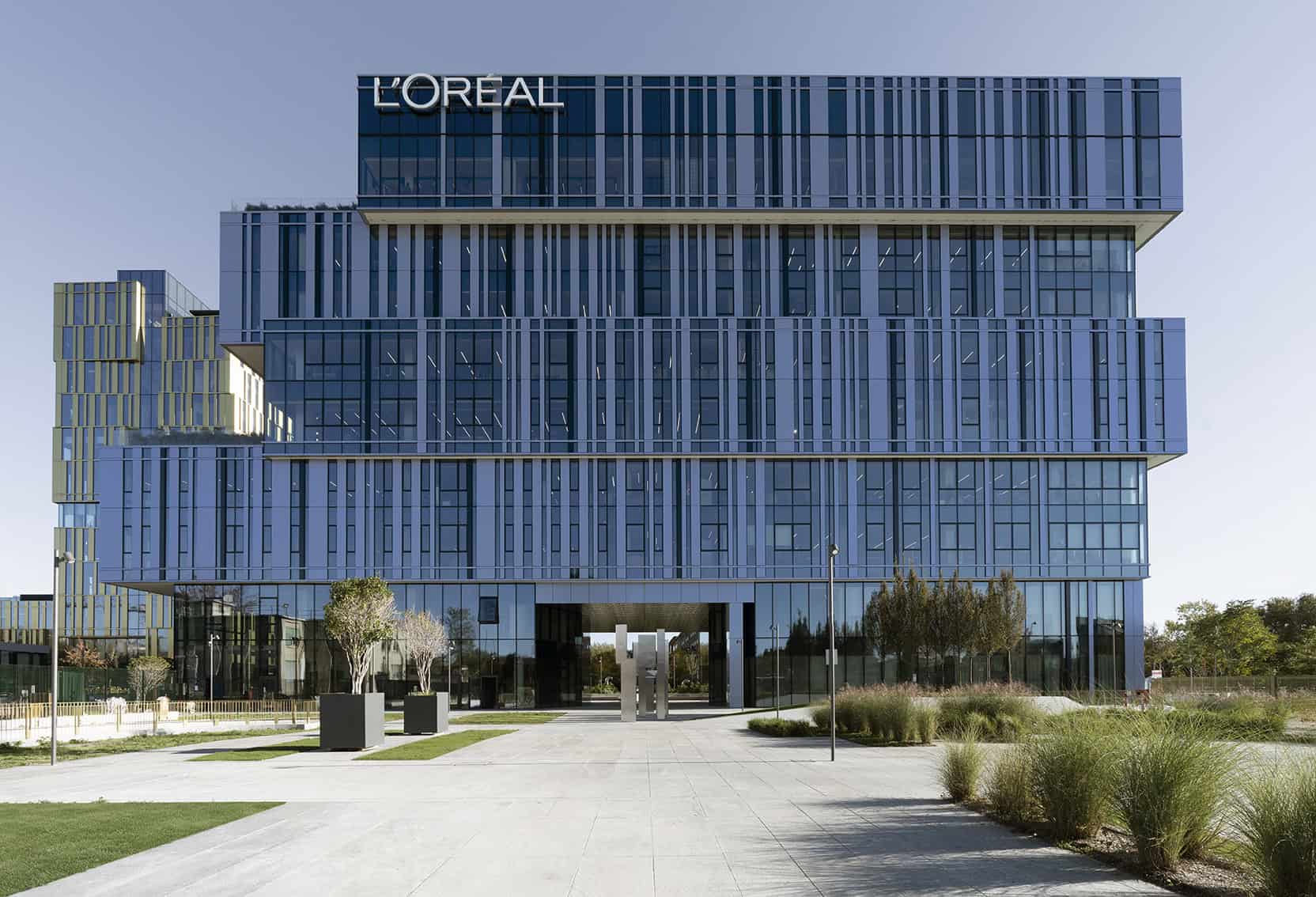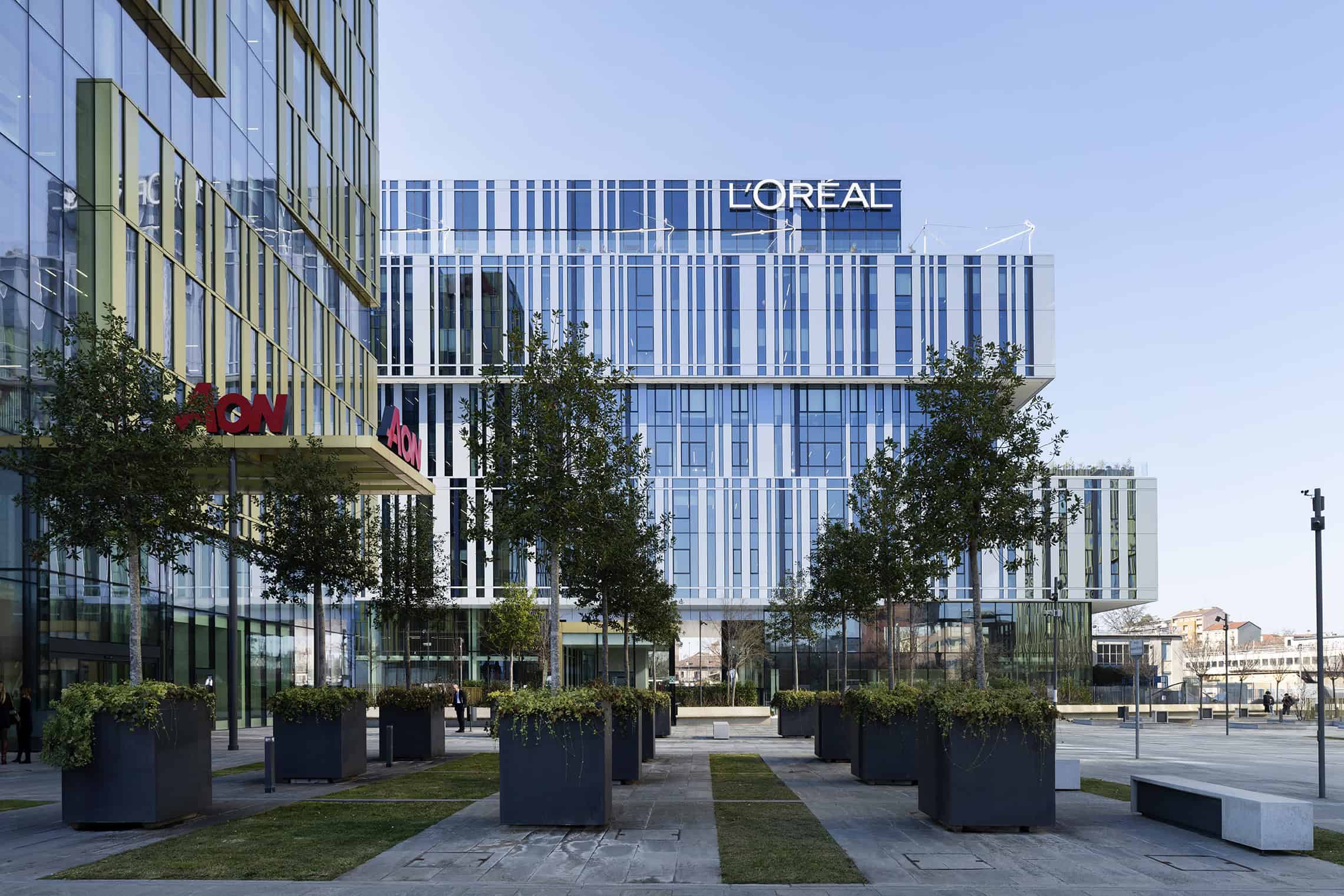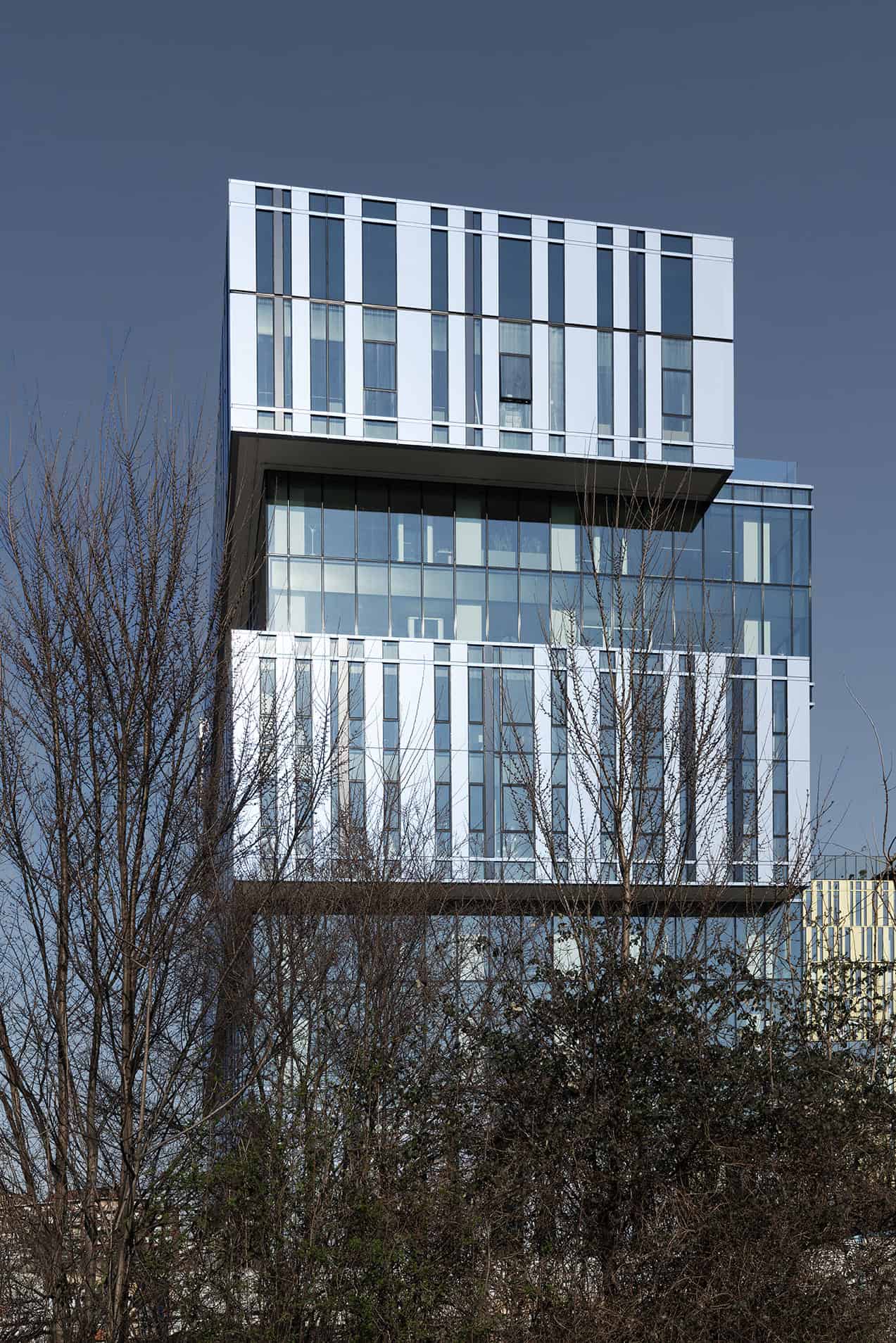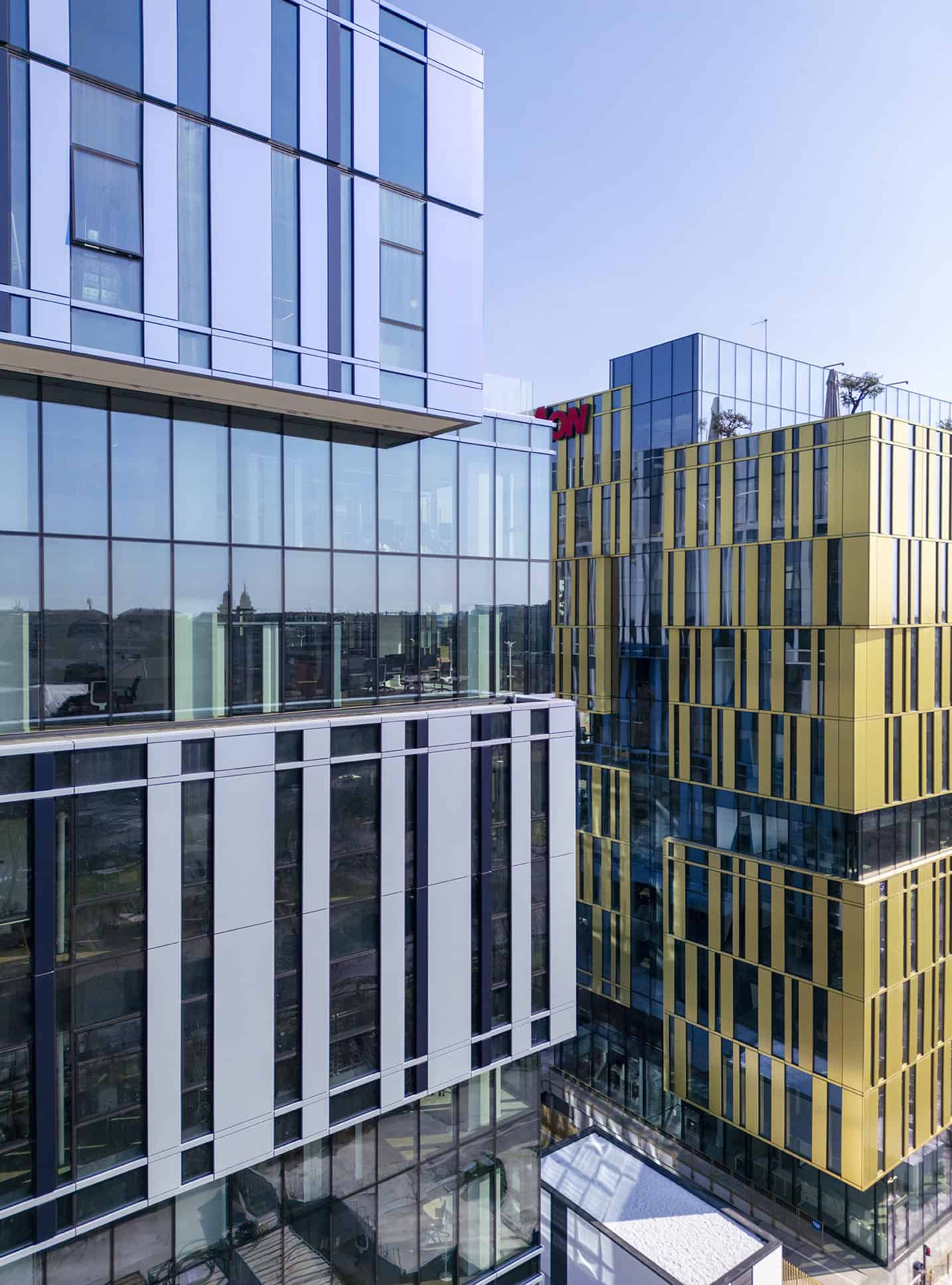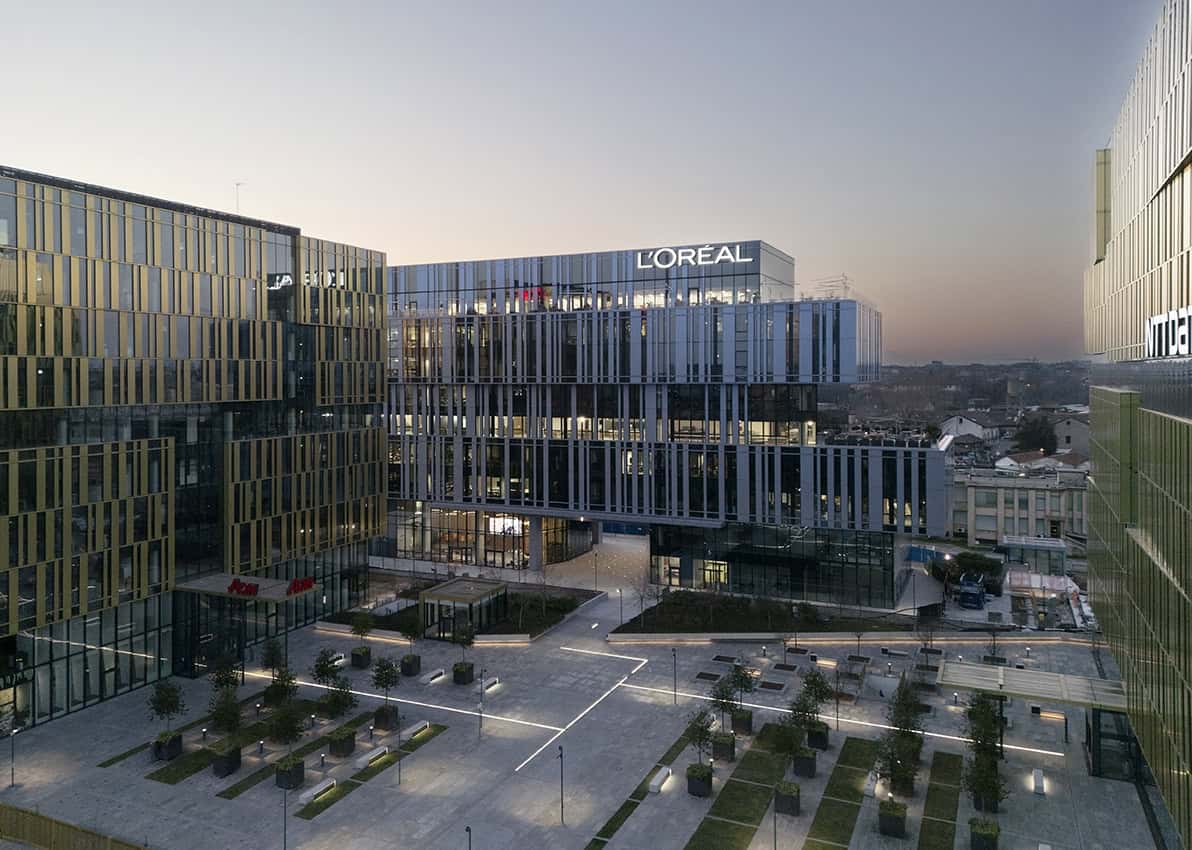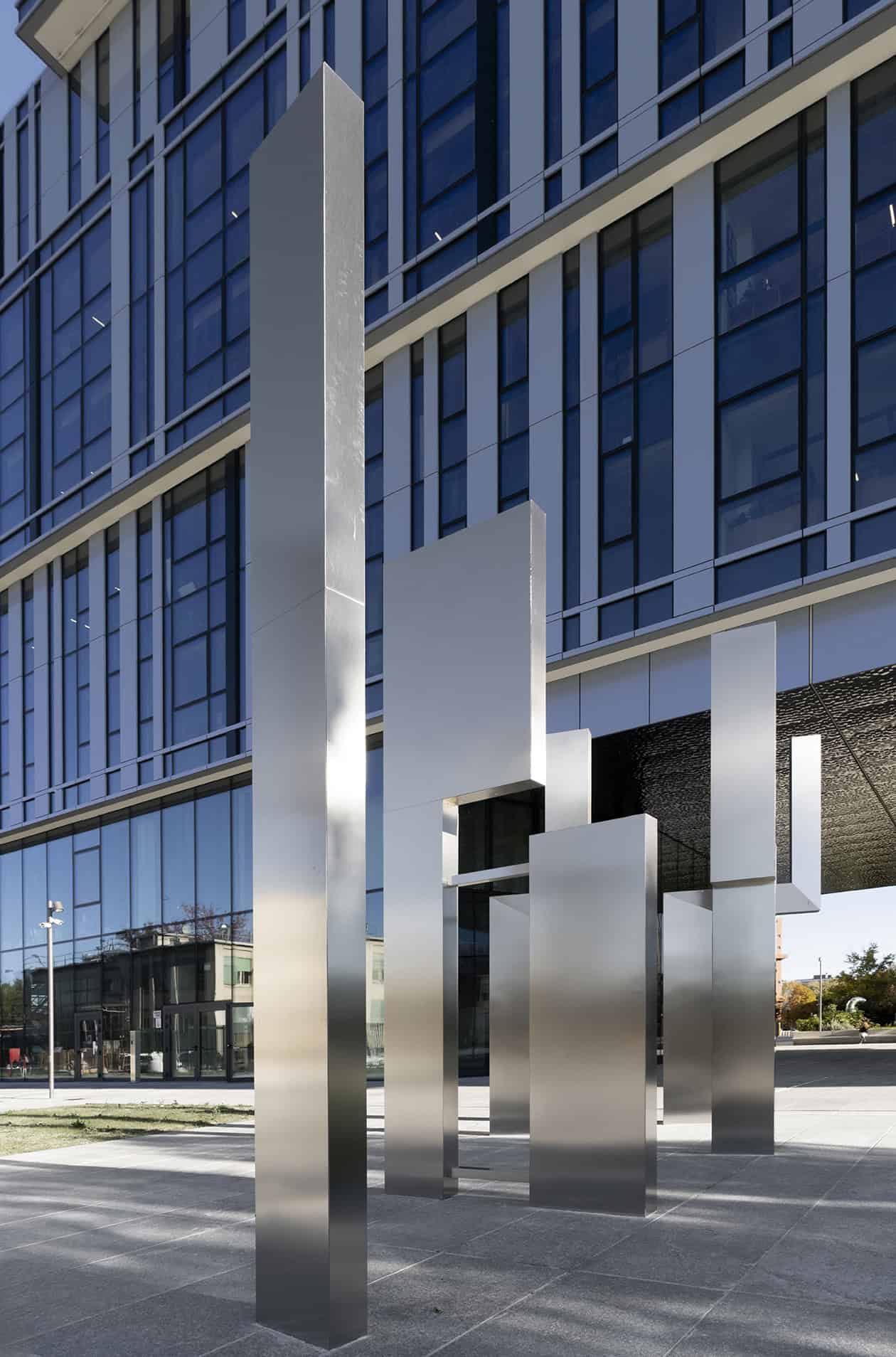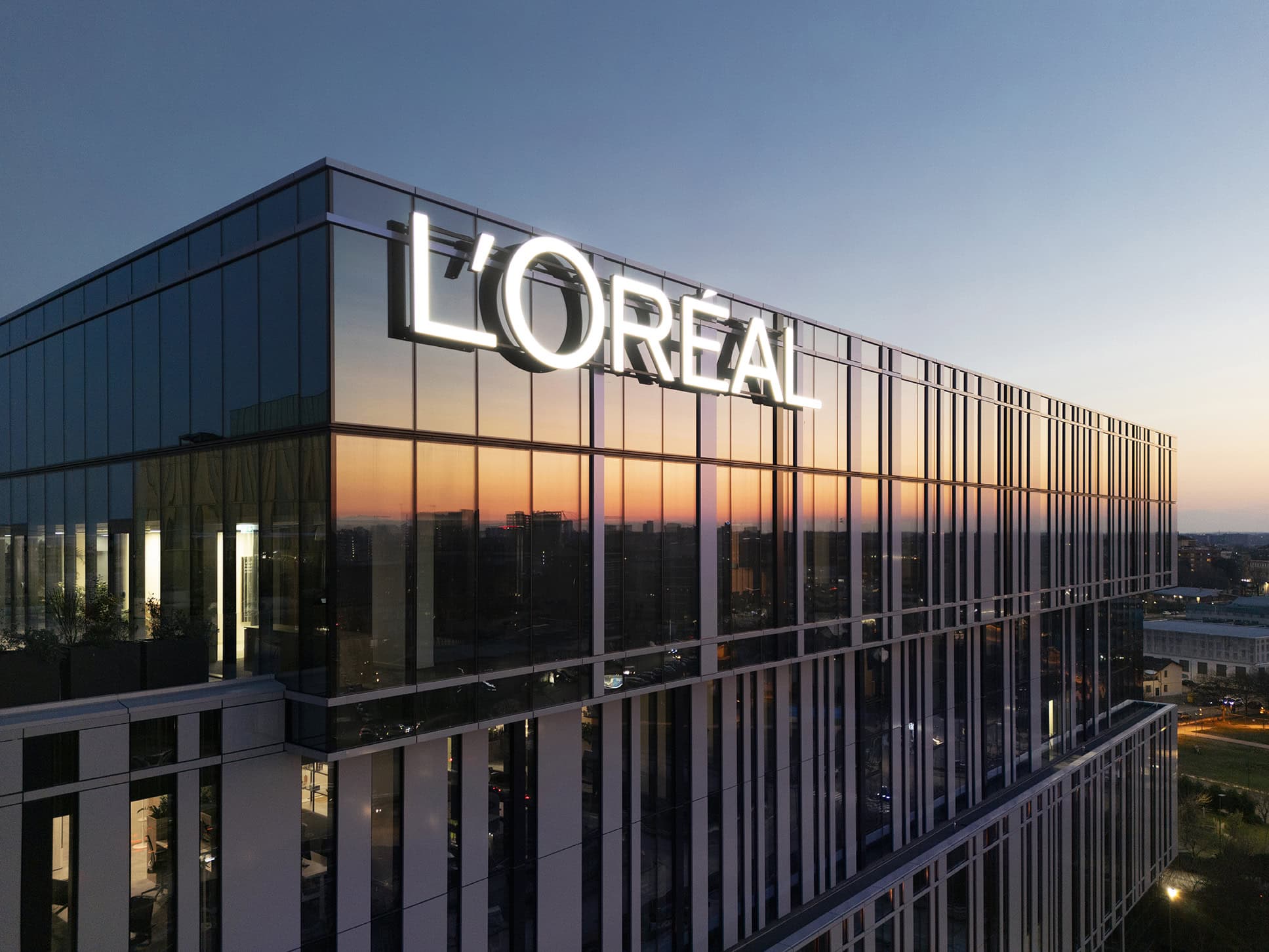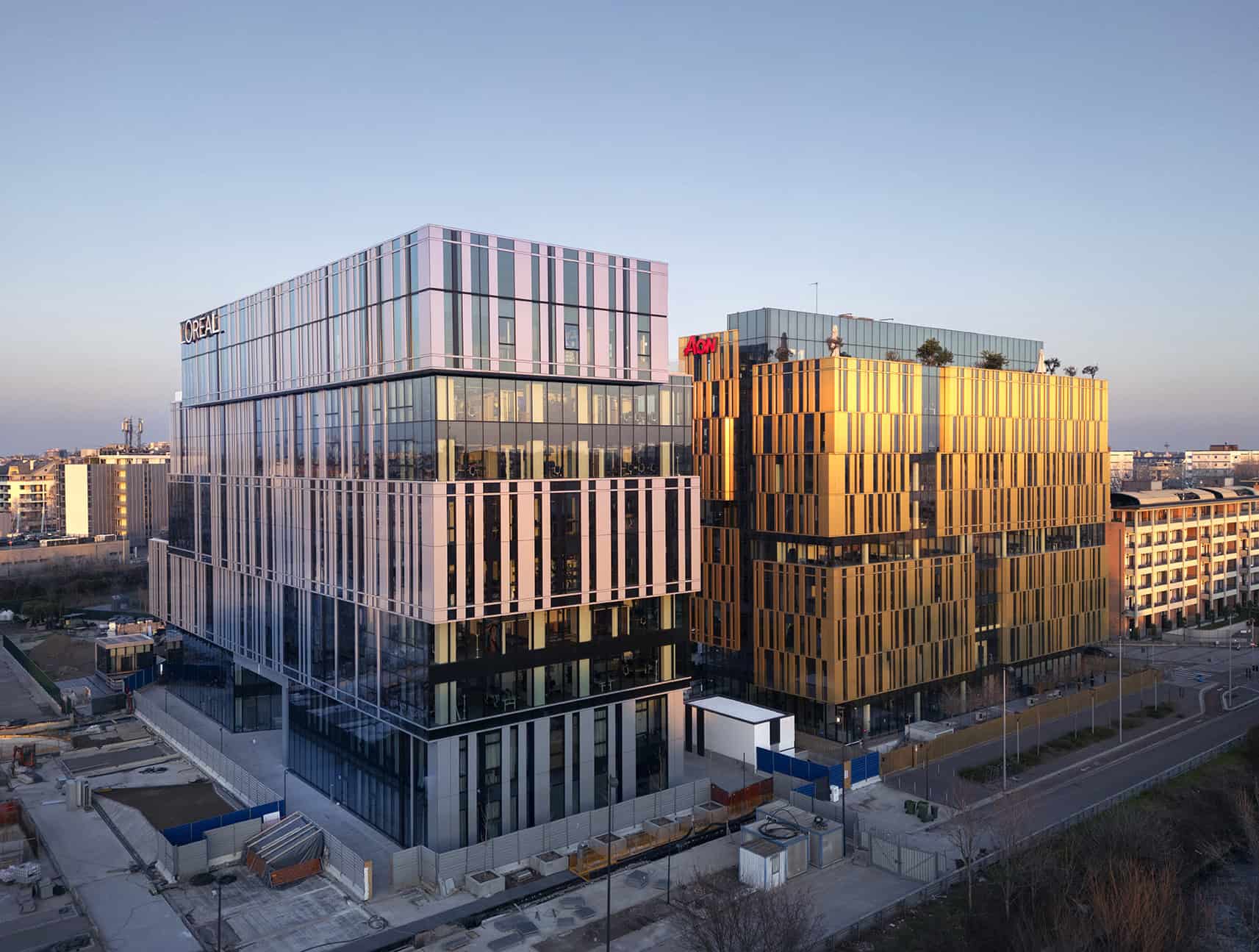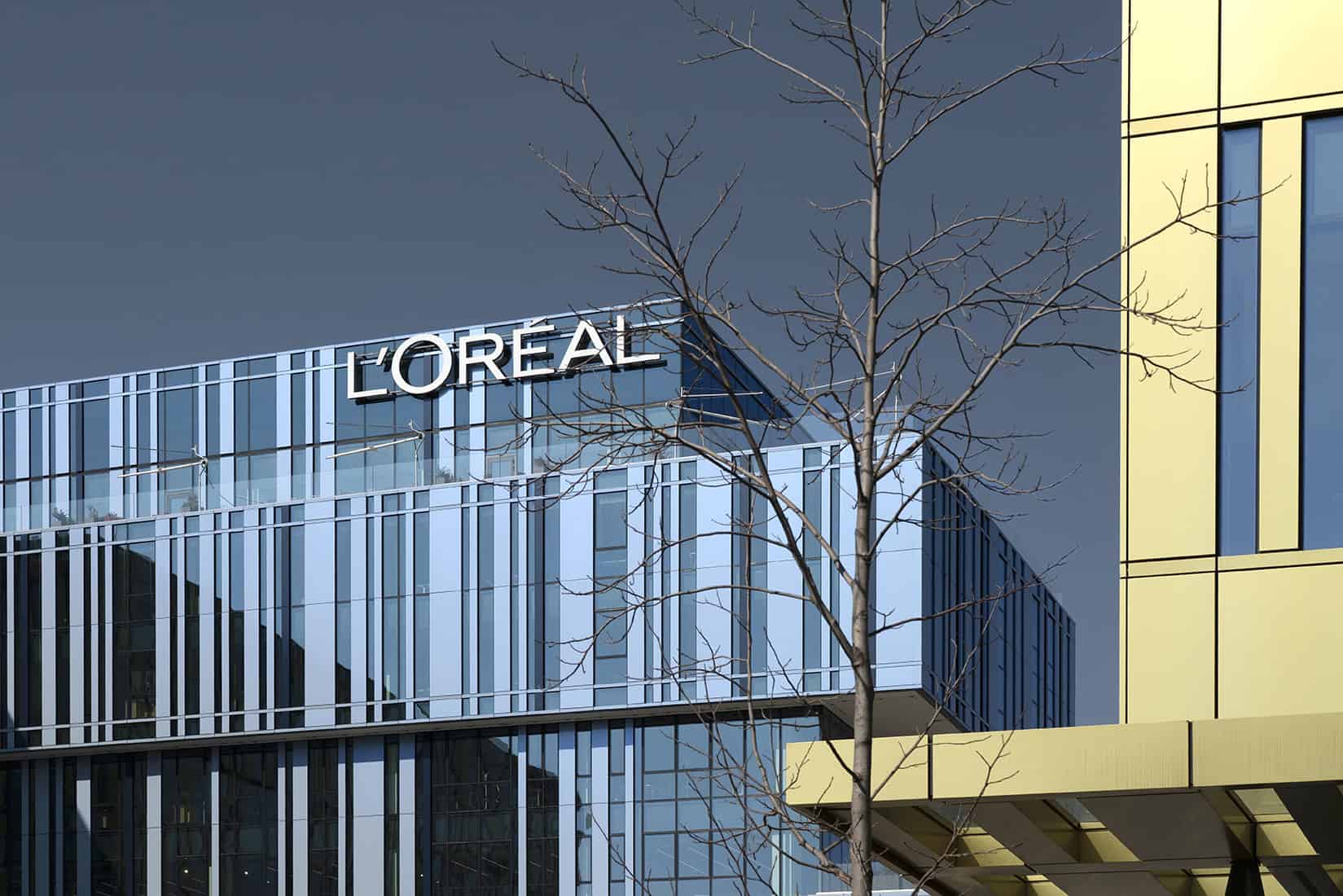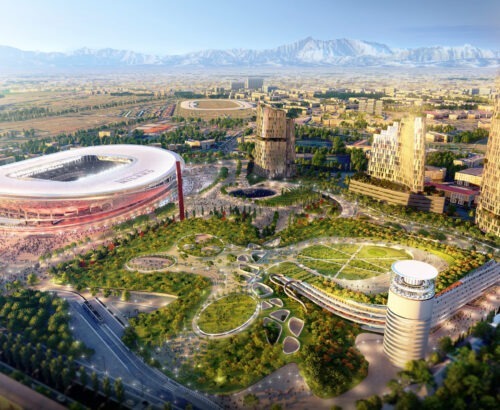
The Sign District is an urban regeneration project in south-west Milan, developed by Covivio and designed by Progetto CMR, which oversaw both the architectural concept and artistic direction. Located in the southern quadrant of the city, near IULM University, the complex originates from the redevelopment of the former 1950s Fonderia Vedani site, transforming a disused industrial area into an innovative, sustainable, and mixed-use business district.
The masterplan comprises four office buildings and two public squares, creating a new urban hub capable of integrating workplaces, green areas, and public spaces, and establishing itself as a national model for sustainable urban regeneration.
Architectural Vision and Identity
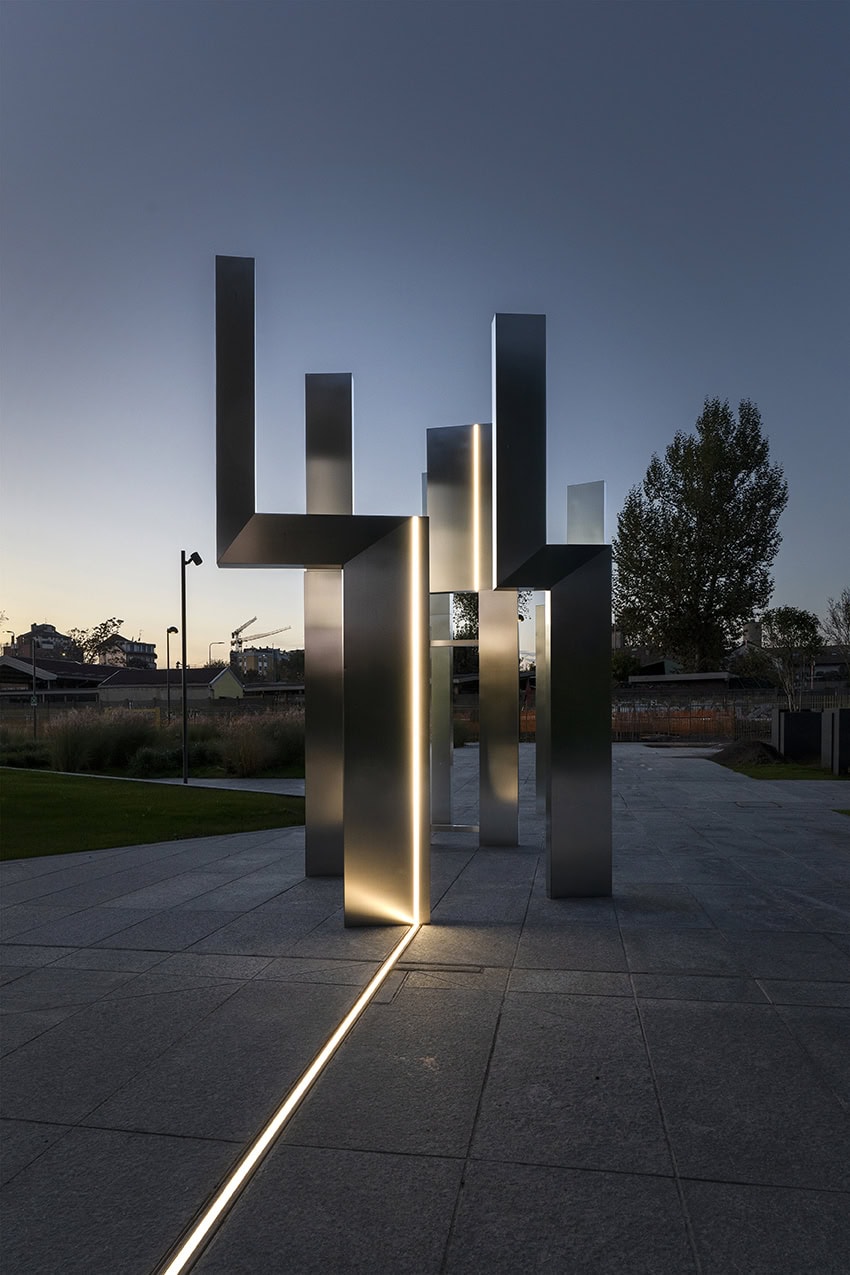
The project interprets regeneration as an environmental, economic, and social process. The architecture stands out for its contemporary façades featuring alternating glazed and opaque surfaces with iridescent metal elements, crossed by the distinctive “sign” of light: a continuous luminous line connecting buildings and squares, becoming the project’s defining feature and stitching the development into its urban context.
The two squares – including Piazza Fernanda Pivano – are connected by a scenic portal at the base of the building, while over 4,000 sqm of green areas create a continuous landscaped corridor. New trees, birch groves, biodiversity-oriented spaces, and smart urban furnishings transform the district into an open and permeable environment, returned to the community.
Next-Generation Workspaces and a People-Centered Approach
The buildings are designed according to the InsideOut method, placing people’s wellbeing at the core of the project. The interiors provide flexible, technology-enabled workspaces, collaborative environments, hybrid areas, and panoramic terraces. Today, the complex hosts international companies such as NTT Data, Aon, and the L’Oréal Italia Beauty Hub, confirming how architectural quality, sustainability, and ESG standards are decisive drivers of real estate attractiveness in Milan.
Sustainability, Innovation and Certifications
The Sign has been designed according to the highest energy and environmental standards. The entire district integrates advanced solutions, including:
- High-performance thermal and acoustic façades
- Photovoltaic systems exceeding minimum renewable energy requirements
- Radiant ceilings and high-efficiency air handling units
- LED lighting with DALI standards
- A BMS (Building Management System) for integrated building control
- WiredScore Platinum certification for digital connectivity
- The first urban regeneration project in Italy to achieve BiodiverCity certification
- LEED Platinum certification obtained for Building D, which houses the L’Oréal Italia Beauty Hub
The project minimizes land consumption by redeveloping already urbanized areas and introduces habitats dedicated to butterflies, bees, hedgehogs, and amphibian species, strengthening the ecological value of the site.
Today, The Sign District represents a new landmark for Milan, demonstrating how urban regeneration can generate environmental, social, and economic value, contributing to the development of a polycentric, sustainable, and future-oriented city.
Awards
Metra Building Award 2025 : The Sign, L’Oréal Italia Headquarter
WT SmartCity Award 2024: The Sign
RĒGULA Award 2023 – The Sign Building new L’Oreal Italy HQ
Metra Building Award 2022: The Sign Buildings A, B, C
RE ITALY 22 / Fiabci Prix d'Excellence Awards Finalist «Office» category for The Sign Building A, B, C (Covivio)
Urbanfile Award for Architecture and City Planning 2021 New costruction managment: The Sign